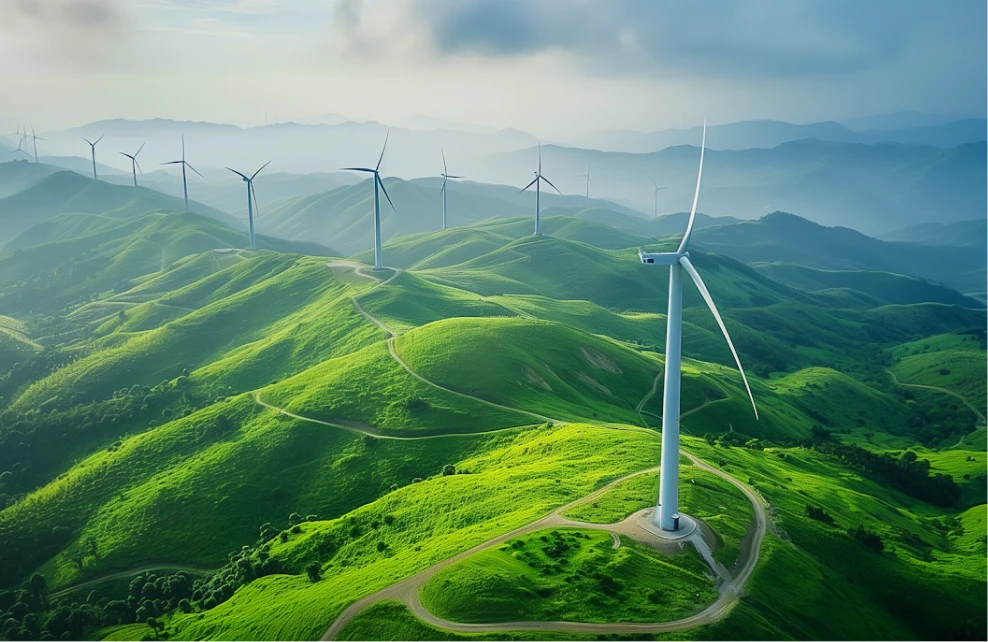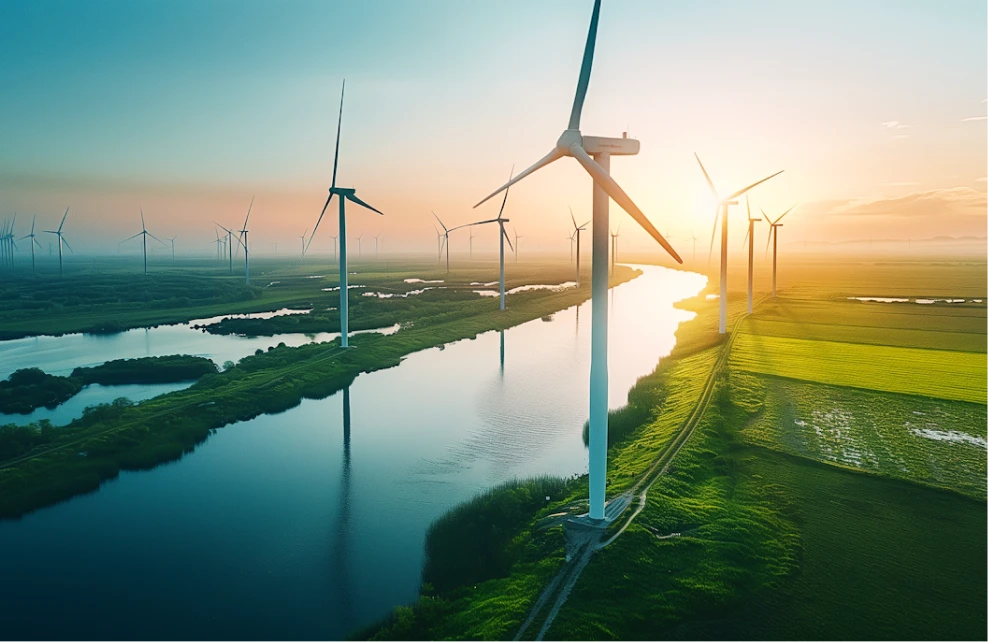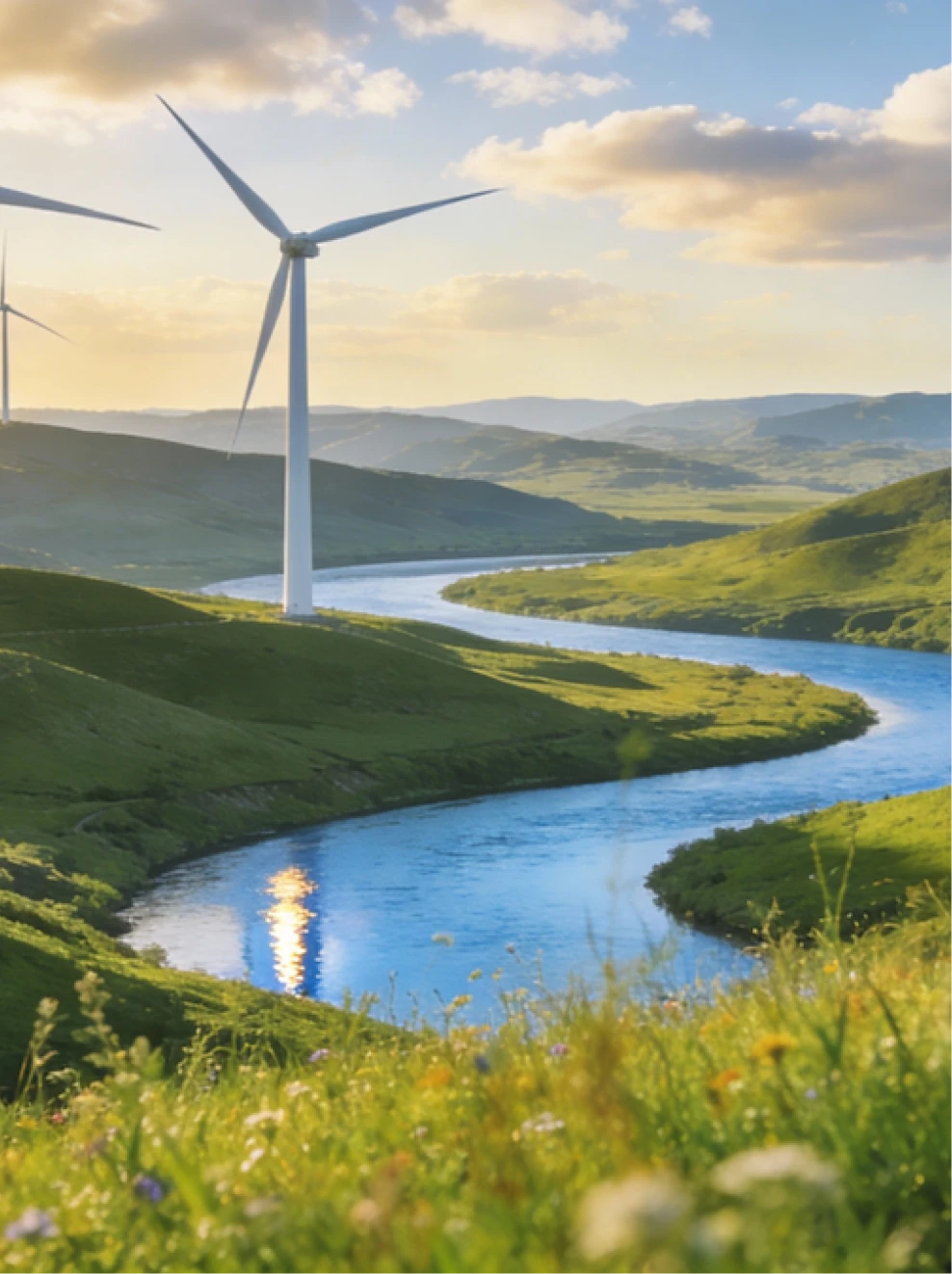
Blue horizon wind park
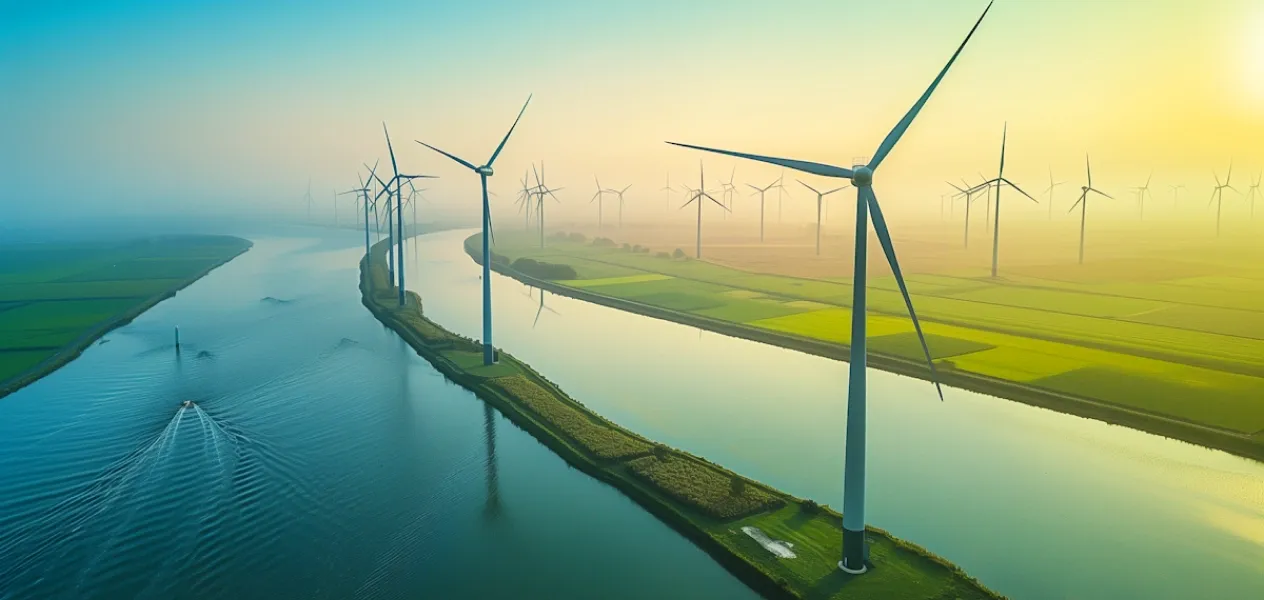
The original site held forty-eight turbines commissioned in the late 1990s, each rated at 1.2 MW. They were reaching the end of a design life, and the grid connection they sat behind was worth considerably more than the turbines were.
Why repowering wins
A new greenfield site in Denmark faces a multi-year consenting and connection process. This site already had both, plus twenty-four years of measured wind data — a resource record no new development can buy.
Fourteen modern turbines replaced forty-eight old ones. Hub height rose from 60 meters to 125, which on this site’s shear profile is worth about twenty percent more energy before any improvement in rotor efficiency is counted. Total output went from 178 GWh to 552 GWh annually on the same connection capacity, because the new machines have a flatter power curve and spend far more hours near rated output.
Decommissioning was half the project
- 48 turbines dismantled, with nacelles and generators sold into a refurbishment market
- 3,100 tonnes of steel recovered and recycled through a documented chain
- Foundations broken out to one meter below grade and the aggregate reused on site for access tracks
- Blades, the genuinely hard fraction, sent to a cement kiln co-processing route with the mass balance documented
Repowering is a waste management project with a wind farm attached. Budget for the blades before you budget for anything else.
Community and consenting
Taller turbines change the visual and acoustic picture for neighbors, and fourteen large machines are not a smaller intervention than forty-eight small ones. We modeled noise and shadow flicker at every dwelling within two kilometers, ran three public sessions with the model outputs visible, and adjusted two positions on the strength of what came back. Consent was granted without appeal.
The site now generates more than three times its former output on the same connection agreement, and the decommissioning record is documented well enough to serve as a template for the next two repowering studies in the portfolio.
Wind capacity without
taking land out of use
- Twelve landowners with different crop rotations and different tolerances for access tracks
- A breeding population of red kite inside the survey area
- A local plan that had never assessed a turbine above 150 meters
Twelve turbines on working farmland