
Solutions /
Battery storage

Storage sized against
a real revenue stack
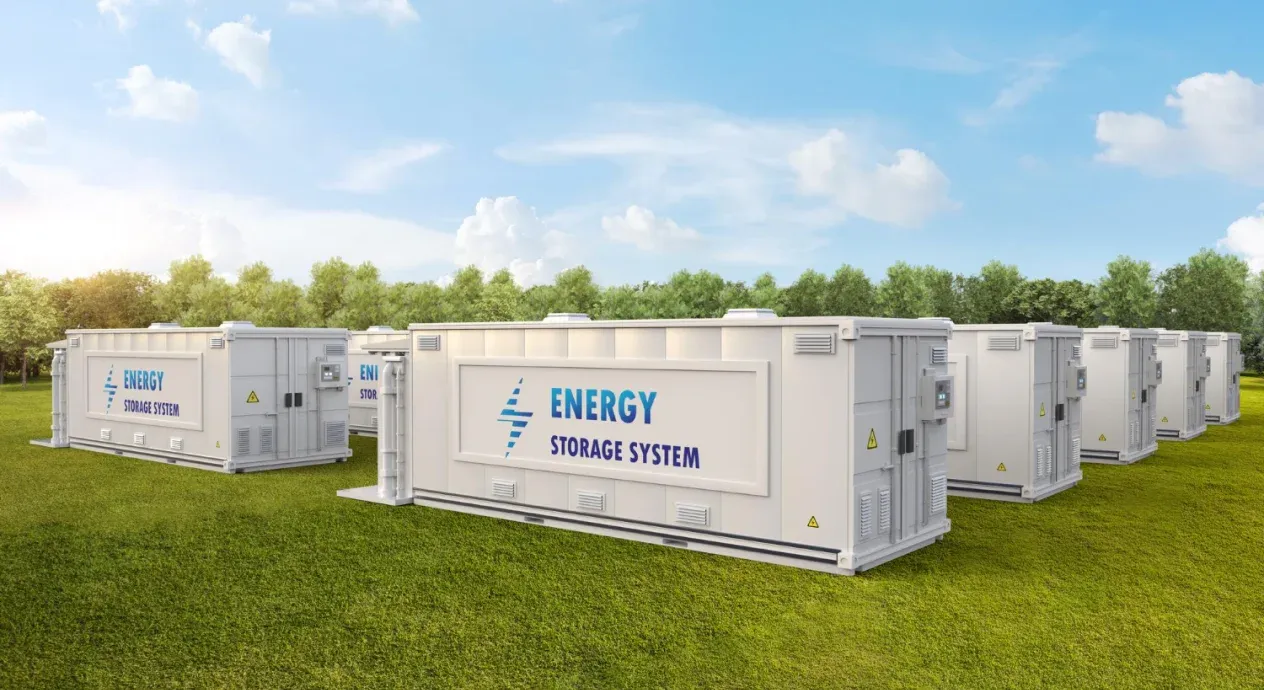
Grid-scale and behind-the-meter storage sized against real revenue stacks, with an augmentation plan for year eight.
Battery storage
1.9 GWh
Storage capacity delivered
3
Markets stacked per asset
98.6%
First-year availability
Flexibility where the network needs it

Flexibility where the network needs it

A battery is only as good as the revenue it can reach and the degradation it can survive. We model both before anyone specifies a cell.
Hourly revenue stack modeling
Cell and enclosure selection
Thermal design for site ambient
Fire code and separation
Grid connection and protection
Augmentation planning to year fifteen

Why storage earns
its place

Six reasons storage has moved from a network experiment to the default companion for new generation.
Cheaper energy
Cheaper energy
Charging off-peak and discharging at peak cuts the cost of every hour the site cannot generate.
Cleaner dispatch
Cleaner dispatch
Storing surplus renewable generation displaces the gas plant that would otherwise cover the evening ramp.
Revenue in three markets
Arbitrage, frequency response and capacity can be stacked when the control strategy is designed for it.
Connection relief
Connection relief
A battery behind the meter often removes the need for a substation upgrade entirely.
Predictable degradation
Warranties written against measured capacity, with augmentation priced from the start.
Asset life planned
Asset life planned
A fifteen-year plan with augmentation points, not a ten-year asset sold as twenty.
Design for the site, not the datasheet

Design for the site, not the datasheet

Most storage disappointments trace back to a specification written for laboratory conditions and installed somewhere hotter.
Ambient-led thermal design
Cooling specified to measured site extremes, which is what protects summer throughput.
Revenue-led sizing
Power and energy sized from the modeled stack rather than from a round number.
Code headroom
Layouts carry spare bays so a separation-distance change does not force a redesign.
Remote operability
Assets designed to be run from a control room, because the nearest technician is hours away.

A battery is not an energy asset so much as a flexibility asset, and flexibility is paid for in several markets at once. Getting the sizing right means deciding, up front, which of those markets the system is chasing and accepting the trade-offs that follow.

Power versus energy

A one-hour system and a four-hour system with the same nameplate are different businesses. Short-duration assets chase frequency response and fast reserve, earn well when the grid is volatile, and cycle shallowly. Long-duration assets chase price spreads and capacity payments, cycle deeply, and degrade faster per year. We model both against your local market’s actual settlement data for the last three years before recommending a duration.

The parts people underestimate

  • Augmentation. Cells lose capacity. A twenty-year model with no augmentation budget is a twenty-year model that ends at year twelve. We plan the cabinet space and the capital for it at design stage.
  • Auxiliary load. Thermal management draws power year round and can take two to four percent off round-trip efficiency in a hot climate.
  • Fire safety. Spacing, deflagration venting and the local fire authority’s expectations shape the site layout more than the electrical design does.
  • Grid code compliance. Ride-through, reactive capability and telemetry requirements vary by operator and are not negotiable late.

Degradation is a contract term, not a physical inevitability. Warrant the throughput you actually plan to use and the supplier will price the risk honestly.

Controls are where the money is

Two identical installations can differ by a third in annual revenue purely on dispatch logic. We integrate an optimizer that bids into the markets available to you, respects the warranty’s cycling limits, and is retuned when market rules change — which, in every jurisdiction we work in, they do.

Behind the meter, the same hardware does a different job: shaving demand charges, backing up critical load, and letting an on-site solar array serve the evening peak. The design differs mainly in metering and in how the system decides what to serve first during an outage.

Frequently asked
questions

Frequently asked questions
Photovoltaic modules convert sunlight directly into direct current electricity, which an inverter converts to alternating current for your site or the grid. Output follows irradiance rather than demand, which is why we model your hourly load alongside the resource before fixing a system size.
Every engagement starts from your own data — interval meter readings, an asset register, or a year of on-site measurement — rather than from a template. The design that follows is sized to your load profile, site constraints and growth plan, and we show you the trade-offs we made on the way.
Advisory engagements usually run six to sixteen weeks. Built projects depend almost entirely on permitting and grid connection: a commercial rooftop can be energized inside a year, while utility-scale generation typically runs two to four years from site control to commercial operation.
Yes. We build the inventory, install the controls, map one data set out to whichever frameworks apply to you, and draft the disclosure itself. We also run assurance readiness reviews so the first engagement with an auditor is not the first time the process is tested.
We build the pathway from your asset register, aligning abatement to replacement cycles so you are not writing off working equipment. We also quantify the residual emissions honestly and help you procure durable removals against them, rather than assuming the last ten percent away.