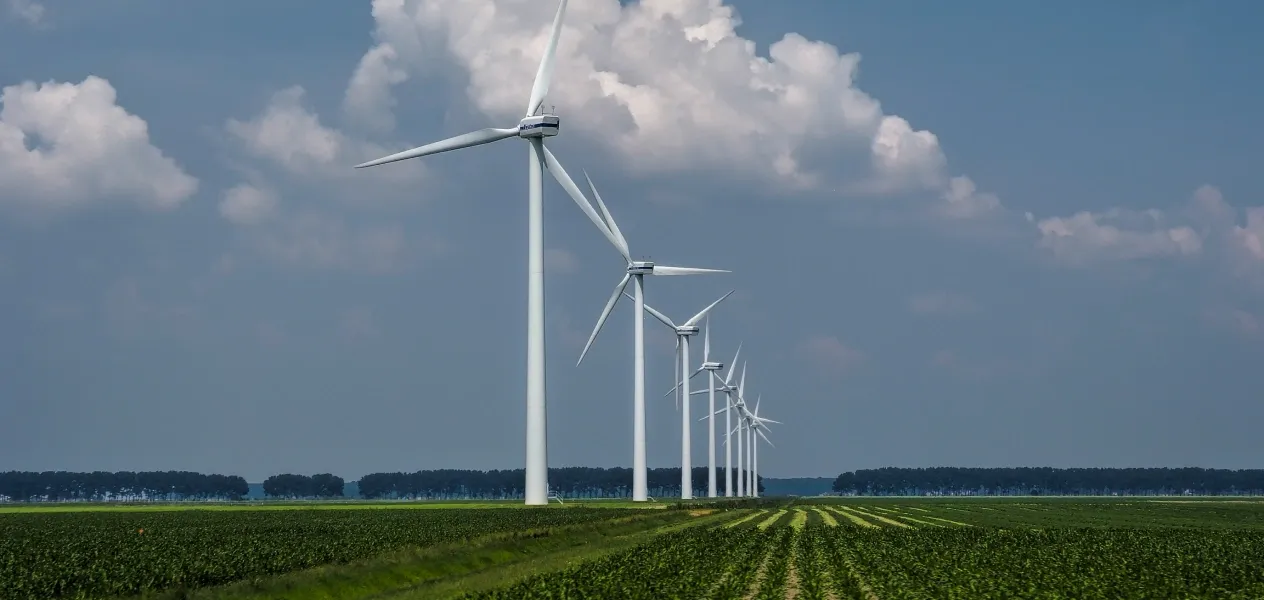
North sea wind array
Nordlys Energi held a seabed lease and a grid connection offer with an expiry date. The project had been through two feasibility studies without reaching a financial investment decision, largely because the installation schedule had never been tested against what vessels were actually available.
The scheduling problem
We rebuilt the program backward from the heavy-lift vessel market rather than forward from a desired commercial operation date. That single change moved foundation installation a full season earlier and removed a weather-window assumption that would not have survived a normal winter.
Everything else became float. Cable manufacture, onshore substation works and turbine delivery were all sequenced against the two fixed offshore campaigns, and penalties in the supply contracts were aligned to those dates rather than to the overall completion date.
Engineering decisions
- Monopiles rather than jackets, after geotechnical work confirmed competent sand throughout the array area
- A 66 kV array voltage, cutting cable losses and reducing the number of strings
- Scour protection sized from a two-year current and wave record, not a regional model
- Noise mitigation during piling, with marine mammal observation across the full campaign
The array cable route was moved 900 meters to avoid a designated sandbank. That detour cost four million euros and removed the largest single consenting risk on the project.
Outcome
First power came seven weeks ahead of the contractual date, and the array reached full commercial operation within the same construction season. Measured capacity factor across the first twelve months is forty-eight percent, half a point above the P50 forecast.
Nordlys now operates the array with an availability-linked service agreement and an independent condition monitoring feed, which has already supported two gearbox warranty claims on the operator’s own data.
The measurement record and the geotechnical dataset assembled during development remain the project’s most durable asset, and both are already being reused in the feasibility work for an adjacent lease area.
An offshore build with
a fixed weather window
- Installation vessel availability booked eighteen months ahead across the whole North Sea
- Unexploded ordnance survey returning more contacts than the baseline assumed
- Export cable landfall through a protected dune system
Forty-six months offshore